Andranondambo is a village in the Anosy region of southeastern Madagascar, in the hill country around the rural commune of Tranomaro. Fine blue sapphire was found there in 1991, and by the mid-1990s close to 10,000 miners had come to dig. The deposit was one of the first large sources of cuttable sapphire on the island, and its best stones drew comparisons with the classic blues of Sri Lanka, Myanmar and Kashmir. The rush was short, and most of the workings had been abandoned by the late 2000s.
Location and access
The Tranomaro area lies inland from the port of Taolagnaro, better known as Fort-Dauphin, in the Amboasary Sud district. Gemological reports from the 1990s placed the Andranondambo workings about 100 km north-northeast of Fort-Dauphin, reached by a long gravel road from the town of Amboasary. The country is a dry plateau, mostly around 500 meters above sea level, with hills rising much higher. Low rainfall made the pits workable all year.
Andranondambo itself sits in Maromby commune, next to Tranomaro commune. Mineral collectors and geologists often treat the two together as the Tranomaro and Maromby area, because the same belt of rocks runs through both.
Gems before the rush
Sapphire in this corner of Madagascar was not a complete surprise. Étienne de Flacourt, the French governor at Fort-Dauphin, recorded sapphires in the south of the island in 1658. Mining in the Tranomaro area began long before the gem boom: mica was found near Tranomaro in 1912, and from the 1950s French teams worked thorium and uranium ores in the district.
In the early 1950s a French geologist working in the area collected sapphire crystals near Andranondambo, along with a new calcium aluminum oxide later named hibonite after the prospector Paul Hibon. Those stones were described as mineralogical finds and set off no rush.
The sapphire rush of the 1990s
Gem-quality blue sapphire turned up in the Tranomaro area in 1991, during a severe drought in the south. More stones were found near Andranondambo in 1992, including blue sapphires of up to about 35 carats, and miners began offering them in Antananarivo. Word spread widely in 1993, and Thai buyers arrived. Thai merchants soon learned that pale or milky blue rough from the new field improved a great deal with heating, and buying picked up quickly.
At different times up to about 10,000 miners worked the field. By March 1995 the number on site had dropped to roughly 3,000. Some foreign companies tried mechanized mining from 1994 and 1995, often in partnership with local landholders, but most stones came from hand-dug pits. Dealers in the mid-1990s reported shipments on the order of 100 kg of rough per month to Bangkok. Within a few years the richest ground was worked out. A later sapphire rush at Ilakaka in the southwest, from 1998, became far larger.
How the sapphires formed
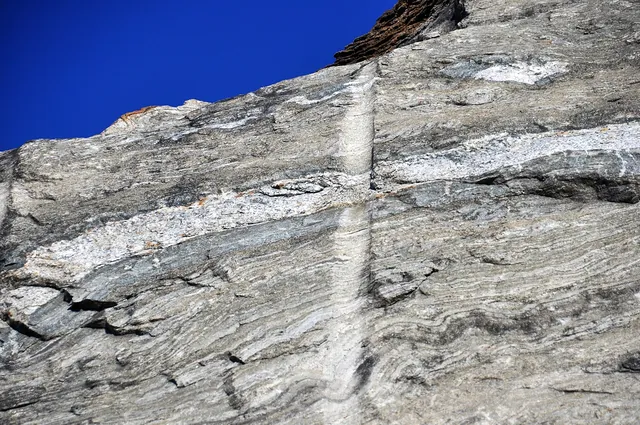
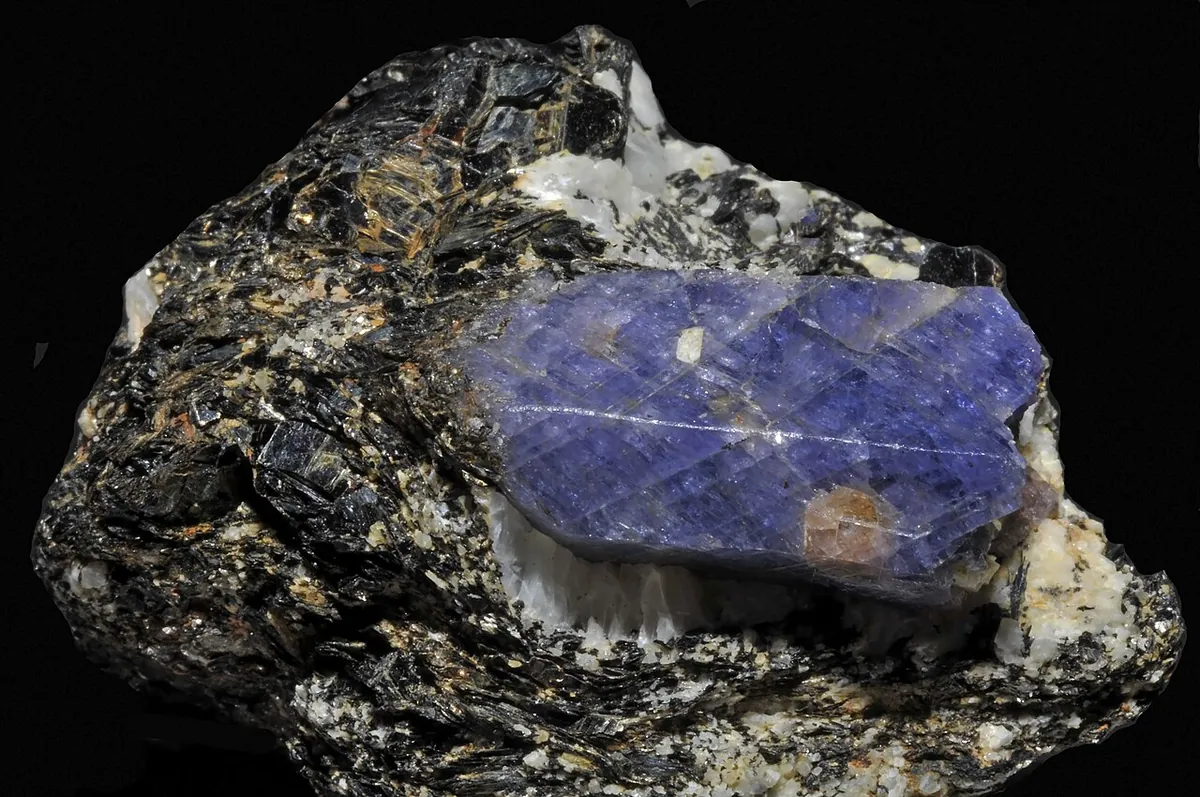
Andranondambo sapphire did not come from basalt like most Thai or Australian sapphire. It grew in skarn, a rock formed when hot fluids react with marble and other calcium-rich rocks. The skarns sit at the contact between granite and the Proterozoic Tranomaro group, a series of very old metamorphic rocks that includes gneiss and marble. The metamorphic rocks page explains how heat and pressure change rocks and grow new minerals in them.
Studies of the host rock and of fluid trapped in the sapphires point to high temperatures, around 800 to 850 degrees Celsius, and fluids rich in carbon dioxide. The rocks of southern Madagascar reached these conditions during the Pan-African mountain-building events, between roughly 565 and 490 million years ago. Geologists still debate how much of the corundum came from metamorphism alone and how much from fluids moving through the rock, but most agree on a skarn setting in altered marble and calc-silicate rocks.
The sapphires were mined in two ways. Some came from weathered soil and gravel a few meters below the surface. The rest came from the hard, white skarn rock itself.
Mining by hand
Diggers sank narrow shafts about 2 to 2.5 meters across and as deep as 20 to 30 meters, using hammers, wedges, crowbars and buckets on ropes. Shafts were often packed close together, leaving thin walls between them, and the ground became dangerous to walk across. Mined rock was broken into small pieces and sorted by hand. The worked zone covered a strip about 3 km long and up to about 1 km wide. A 2004 environmental study described the Andranondambo area as highly degraded, with threatened ecosystems.
What Andranondambo sapphire looks like
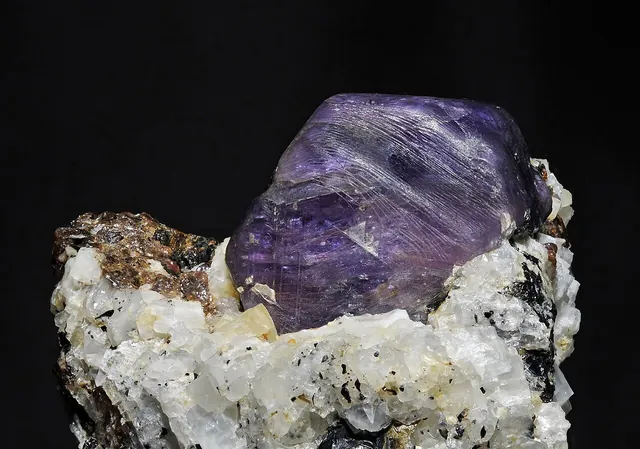
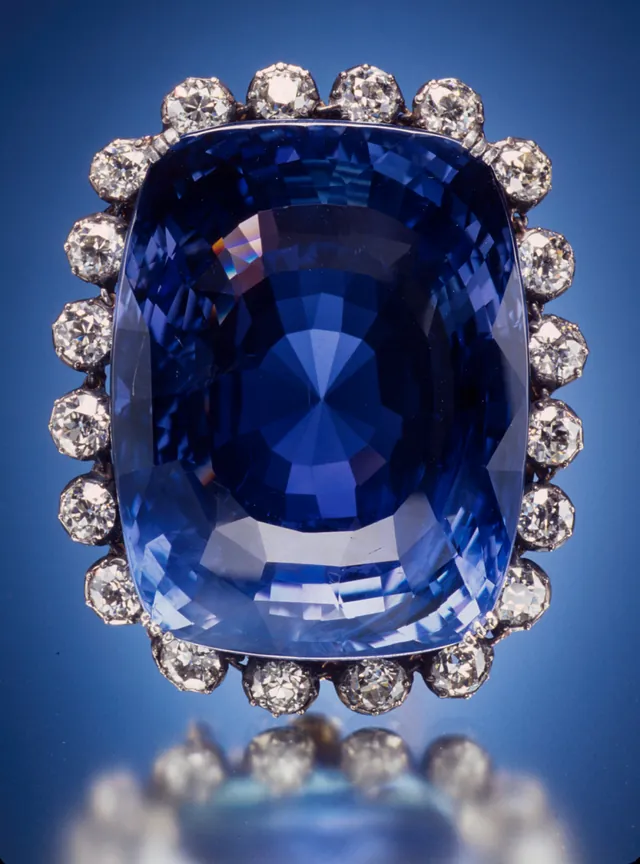
The stones range from nearly colorless to light blue, ordinary blue and fine royal blue. Many have a slightly inky tone. Color is often uneven, with blue patches, zones and phantoms, and cutters need to orient the rough with care.
Andranondambo sapphire contains much less iron than sapphire from basalt sources, including basalt-related sapphire from elsewhere in Madagascar. Most stones are inert under ultraviolet light. Inside, gemologists have found calcite, apatite, phlogopite, feldspar, spinel and tiny thorium and uranium oxide crystals, along with fine rutile needles and fluid-filled healing fractures. This mix of inclusions helps labs tell the material apart from Sri Lankan sapphire, which often contains long rutile silk and frequently shows red fluorescence.
Most rough was small, and most cut gems weighed under 2 carats. Still, roughly one gem crystal in seven cut a stone over 2 carats, and finished gems of 15 to 20 carats were reported. Nearly all of the rough went to Bangkok or Chanthaburi in Thailand for heating and cutting. Heated Andranondambo sapphire is usually medium dark to dark blue, and labs can often separate heated from unheated stones by changes in the inclusions. The page on sapphire treatments explains how heat changes corundum.
Other minerals of the Tranomaro area
The skarns and gneisses around Tranomaro produce many minerals besides sapphire, and several of them are known to collectors worldwide:
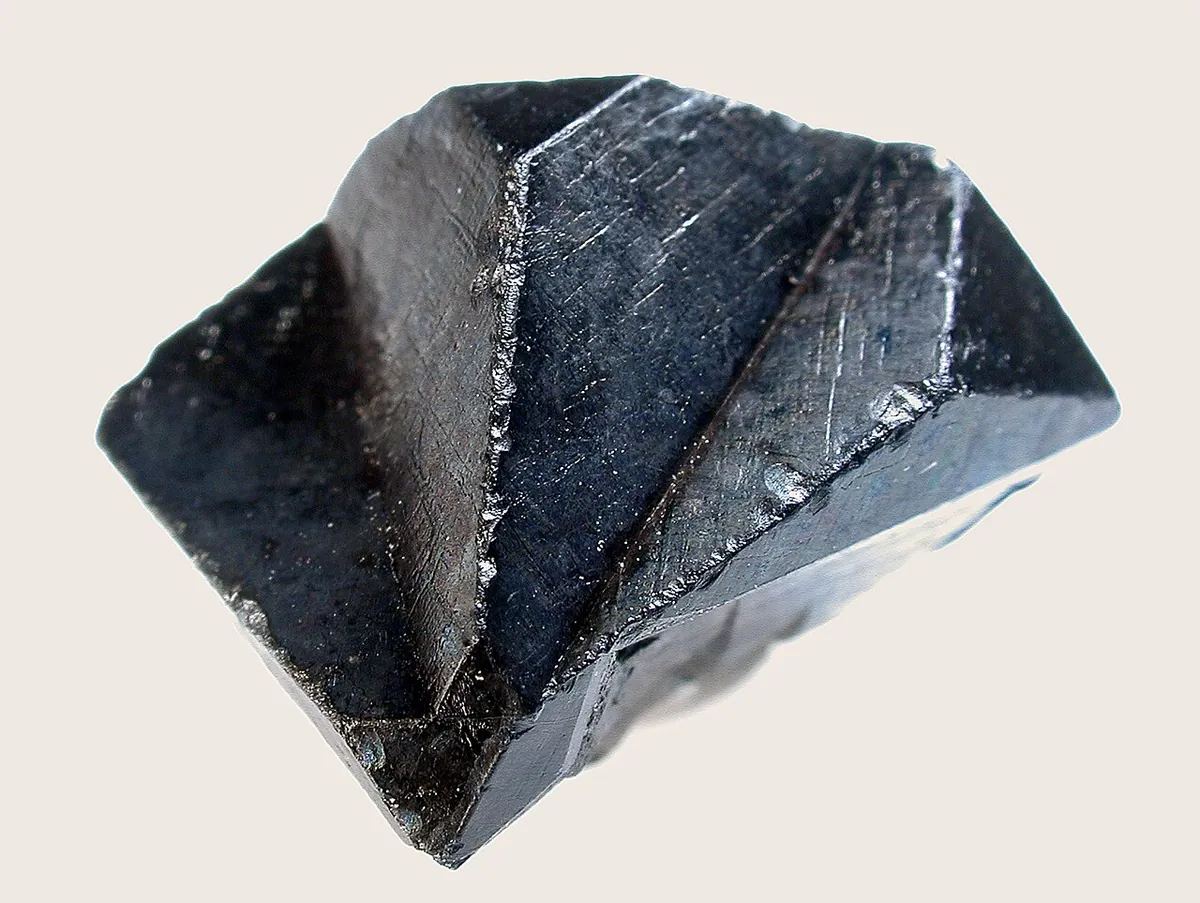
- Hibonite, a rare calcium aluminum oxide first described from Esiva, just west of Andranondambo.
- Thorianite, a thorium oxide that forms black cubes up to several centimeters across.
- Phlogopite mica, the target of the area's early mica mines.
- Spinel, common in the skarns and as inclusions in the sapphires.
- Diopside, scapolite, anorthite and titanite in the calc-silicate rocks.
Ruby has also been found in marble at a working about 3 km south of Andranondambo, one of the first places in Madagascar where ruby was found in marble. In 2014, a new deposit of gem-quality grandidierite, a rare bluish green borosilicate, was discovered in pegmatite about 15 km from Tranomaro. Tourmaline crystals have also been found nearby.
Frequently asked questions
Where are the Andranondambo sapphire mines?
They are near Andranondambo village in the Tranomaro and Maromby area of the Anosy region, southeastern Madagascar. Reports from the 1990s put the workings about 100 km north-northeast of Fort-Dauphin (Taolagnaro).
When was Andranondambo sapphire discovered?
Gem-quality blue sapphire was found in 1991, and a rush of nearly 10,000 miners followed in the mid-1990s. French geologists had noted sapphire crystals there in the 1950s, without starting any mining.
Are Andranondambo sapphires like Kashmir sapphires?
Some fine stones have a soft royal blue that reminded dealers of Kashmir, and both come from metamorphic rock belts. Their inclusions differ, and gemologists can usually tell them apart.
Are Andranondambo sapphires heat treated?
Most are. Nearly all of the rough went to Thailand for heating and cutting, and unheated stones of fine color are much harder to find.